Tuesday, November 13, 2012

Put the Book Back On The Shelf


Charles Bukowski was a real asshole. Or at least that is the impression I get when I read his angry writing, gritty songs from the sewer. His voice always on the outside of society and mired in a drunken misery. A poem of his has stood out to me for sometime now, flashing in and out of my consciousness. It has the quintessential Bukowski title – “To the Whore Who Took My Poems” and the quintessential Bukowski scenario – a prostitute has made off with twelve of his poems (and his best paintings!) leaving him to plead, alone (and drunk I presume), to cry out, desperate and defeated, “Are you trying to crush me out like the rest of them?”
No girl ever stole my poems. Or my paintings. I could hardly even give any of those away. Sometimes when I did, they ended up coming back. I don’t even really want them anymore, but what am I supposed to do, throw them away?
No girl ever stole any of my books either. I just always lent them out, and they never ended up coming back. I won’t cry alone about them like Bukowski in defeat. I don’t look at the vacancies on my bookshelf as all-powerful cosmic forces that are leveling themselves against me, as I imagine Chuck felt. Instead, whenever I think of the Bukowski poem, I ponder about each of my missing books, where they might have ended up, and that every girl I ever dated and lent a book to, disappeared from my life. Just like the books.
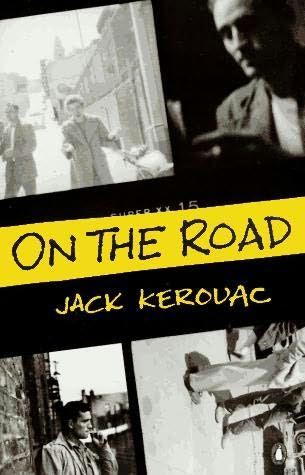
First off, I lent Summer my copy of On the Road. I was deep in my wild Kerouac phase, back then all of seventeen years old with “nothing to offer to anyone but my own confusion[1],” and a copy of On the Road. She seemed to love it as much as I did. We would go to our town’s only all-night diner and order coffee and apple pies and talk late into the suburban night about those wild beat characters, both of us envious of the maddening freedom painted in words on each page. Eventually, we sought out other company and more exciting things than apple pie and talking about Dean Moriarity and Sal Paradise. And I never got my On the Road back.
    Nikki said she wanted to read a book. It seemed like this might have been something novel for her. I didn’t want to overwhelm her so I lent her something easy to digest but was also one of my all-time favorites, Skipped Parts, by Tim Sandlin. Anyone would love Sandlin’s straightforward story-telling and laugh-out-loud humor. Nikki said she didn’t get it. I think she lent it to a friend. I never saw that copy again.
  I lent The Picture of Dorian Grey to some girl in a college class of mine to try to impress her. It didn’t work. And I can’t remember her name or why I never got my book back.
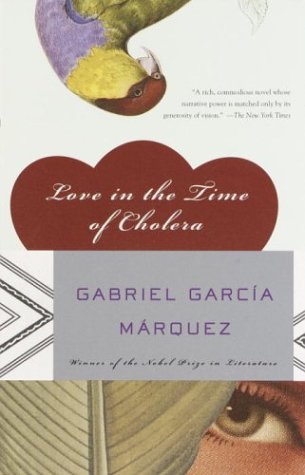
Heather wanted to borrow Love in the Time of Cholera, and I was pleased to lend it out. In some strange sense of the symmetry of life, I had read this book because another girl had suggested it a few years before. Or maybe there’s actually no symmetry there at all. Not long after Heather finished the book, we were finished too.
Lauren asked me what my favorite book of all-time was. I told her One Hundred Years of Solitude. She asked to borrow it. I knew as soon as I handed it to her that I was never going to see that book again.
The last book I ever lent to a girl I was dating was to Kimberly. She wanted something to read and so I recommended Highwire Moon, by Susan Straight. Kimberly loved the book and the way Straight could weave beautiful scenes together with words. She ended up taking the book with her on a trip for work to San Francisco. Kimberly called me from Frisco, upset, and said that she left the book in the backseat of a cab. I told her not to worry about it. She ordered another hardcover copy of Highwire Moon for me, and later became my wife.


[1] Gratuitous Kerouac quote, from On the Road

Monday, October 29, 2012

Them's It's All Over Now, Baby Blue

There are songs that swell up inside of me with their simple graceful beauty and melodious majesty and I listen and I listen and when it reaches their brilliant conclusion, I'm left to declare, I must write about this song. 

Such is the case with Them's gorgeous version of Dylan's "It's All Over Now, Baby Blue."

I was a junior in high school, 1996, the first time I heard the ringing interplay of organ and guitar notes that form the hallmark of this version of the classic Dylan song. Only, it wasn't Them I was listening to. It was a song by Beck. Jackass, off of his seminal album, Odelay (possibly one of the greatest albums of the 1990s). I became instantly infatuated with this sound. A sample, I learned from investigating the tiny congested liner notes inside of Odelay. It read something to point that Jackass contained a sample from "It's All Over Now, Baby Blue," by Bob Dylan. I did not yet know of this Dylan song. I was not the Dylanphile I am now. But the sample, used so prominently and effectively throughout "Jackass" sent me to the record store to buy Dylan's Bringing It All Back Home. I had to hear his original. I had to hear this sample in its natural form.

I arrived at the album's ultimate song, track 11, "It's All Over Now, Baby Blue" but there were no organ notes, no delicately plucked electric guitar. It was sparse, classic acoustic Dylan (I would fully realize a few year's later)with his perfect annunciation of each devastatingly beautiful line like, "Yonder stands your orphan with his gun/Crying like a fire in the sun," which all lead to his somber, repeated, declaration - that it is indeed all over now, Baby Blue. As heavenly as the original is, is it blasphemous to say that I like the cover more?* I mean, just listen to the Them version. The aforementioned organ, the guitar, the waltzing bass line, and the power of Van Morrison's voice, the way he plays those vocal chords like Coltrane played the tenor sax. He's got a vocal range that frolics from raspy desperation to howling back to tender resignation.

No. I did not find the delicious sample from "Jackass" on the Dylan original. I was left to wonder, back in those days before every answer was just a Google search away, where did this sample come from?!

Years later, much after I had forgotten about this silly quest, I was watching Julian Schnabel's biopic of Basquiat. In a scene with the actor-version Basquita and his girlfriend, played by one of all-time favorite actress crushes, Claire Forlani, are in her apartment painting, THERE IT WAS!. The organ and guitar sample I had been waiting to discover. In its original version.

White Whale! Dr. Livingston, I have found you!


*On a similar note, could anyone say that Dylan's "All Along the Watchtower is superior to the Jimi Hendrix Experience's cover? Nay.

Monday, September 17, 2012

The Times They Are A-Changin'

"Come gather 'round people wherever you roam..."

Dylan welcomed the world into his song with the ancient archetypical greeting laid down by minstrels and folksters and voices of protest that had echoed down the wind for years and years.

The anthem begins. If there ever was a song to capture the moment of the early 1960s, it would be this song. Dylan's "The Times They Are-A Changin'" is a song that can both fit perfect into a spot, say 1964, and then transcend beyond that spot so that when some teenager in 1998 stumbles across it, it still sounds present.

It's the opening track for Dylan's third album, also called The Times They Are-A Changin'. Released in January of 1964, this collection would be the both the climax and the conclusion of his protest song period. His next albums would find him experimenting with ever-encrytping personal symbolist poetry, and soon sonically with electric instruments (with infamous and world shattering results). This is the last album where Dylan would wear they storyteller of society hat. His last Woody Guthrie pose. By 1963, Dylan was the undisputed king of protest music. One mask he would soon tear off and set into the fire.

Come gather 'round... The storyteller has a message for you. One last time. Admit that things are changing, and that you should change too. An anthem call to get on board the train of change or else by left behind in its coal-burning dust.

But I'm no child of the 1960s. I came of age in the 1990s. I cannot relate to those who staged sit-ins amidst the fists and spit of centuries of hatred. I can try and protest, but I usually stay home instead and read. or listen to Dylan. For me, as with anyone with memories of being a rebellious teenager, I can still relate to one specific golden line aimed at parents, "Don't criticize what you can't understand, your sons and daughters are beyond your command, your old road is rapidly aging..."

Why does this song still grab me? I am a history teacher. It might be the history teacher in me that has always been drawn to this song. I see with ease the context this song sits in. The Civil Rights movement. The bifrth of the anti-war movement. The free speech college protests. The transformational years before 1968 exploded.

Is this song about the inevitability of change happening on it sown, or is it an invitation to ride a wave and join the movement? To affect change?

When did Dylan record it? October 1963. One month later, John F. Kennedy would be assassinated in Texas. What does that do to the dreamer? To the agent of change. Dylan would say that "they are trying to tell you Don't even hope to change things."

Could JFK's assassination have killed the change agent in Dylan? Could it be what pushed Dylan out of protest and into poetry? Something I've been wondering lately...


Monday, August 20, 2012

Celebration Rock

The first sound that bombards you on the new Japandroids album, Celebration Rock, is the far off explosions of high up fireworks. It sounded odd at first listen - when do you ever hear fireworks without seeing them? When you can only hear fireworks, what then do you see? I see fourths of July from years past, gone, burned all up. Running around with the sparklers of serene childhood and tossing into the air the Budweiser cans of wild youth. Of celebration. Not in a patriotic, God bless America sense. More of a Let's Celebrate Today! Tonight! This Summer! Celebrate surrounded by friends because this surely cannot last forever.


"We down our drinks in a funnel of friends,
We burn our plans down to the end!" 
from "Days of Wine and Roses"

The Japandroids album is perfectly named. Each song rings and rocks as celebrations themselves. Fist shaking, wild dancing celebrations. And even though it is a 2012 album that fits well in 2012, the songs, just like the fireworks, make me nostalgic.

The music. The songs explode in their own colors and patterns just like each singular firework that makes up the collective show. There are no subtle, sleeping songs here, just as there are no quiet fireworks. The tone is set from the booming opening song "Days of Wine and Roses", through standout tracks "Fire's Highway," "Younger Us," and "The House That Heaven Built," right up to the closer, "Continuous Thunder." It is rare to hear a band of just two people rocking so fucking loud. And you want to rock along with them. Sing along with each "WHOAH-OH-OH-OHHHHHH!"

The attack of their songs, shredding distortion, riffs and chord changes remind me of Husker-Du, with the hooks of Superchunk. The choruses remind me in the best way of the post-punk of mid to late 1980s American Underground bands, meeting the harder, louder indie rock of the 1990s. All of this combines to create one of my favorite albums of 2012.


Friday, August 3, 2012

My History With Hot Chip

The first I ever heard of Hot Chip was back in 2005 in a Myspace message (remember those?) from Devin. It read:

Here is what I am listening to right now - Hot Chip, Cut Copy and Quantic Soul Orchestra.

That was the entirety of the message and I appreciated it s brevity. It allowed me to more quickly fire up my music downloading service and do some suggestion-inspired, new music investigation. I started with Hot Chip, and while I do like Cut Copy, Hot Chip was the prize in this trio recommendation (Quantic Soul Orchestra is some nice background music. Nothing life-changing).


I downloaded "The Beach Party" off their first full-length Comin' On Strong (2005). It was a nice sample of the soft electronic grooves, laptop funk and silly lyrics ("I'm like Stevie Wonder but I can see things") that constituted, I would later learn, the entire Hot Chip debut album. I did purchase it. One of the greatest surprises in buying an album is when you realize that the rest of the record is better than the the song that compelled you to make the purchase. My three standout tracks are "Shiny Escalade," "You Ride, We Ride. In My Ride," and "Crap Kraft Dinner." They may also be the most understated tracks on the album. They're soft. Less funky. Less electro-party groove. They are electronic beds to lie upon, close your eyes and float away. Smiling. There was a week in the spring of 2006 when I played "Crap Kraft Dinner" everyday. Seriously. It still stands as my favorite track by Hot Chip, despite all of their sonic and tonal evolutions. The velvet keyboards and saxophones underneath the fragile voice of Alexis Taylor always remind me of those sunny spring days, me lounging outside my Redondo beach apartment, surrounded by the high fence and Hot Chip.

"Crap Kraft Dinner":


Then in 2006, The Warning was released. I was hooked on the Hot Chip. It was a no-brainer purchase. And I wasn't disappointed. The Warning was everything I could have hoped for in a follow-up album. Hot Chip developed their sound, pushed new electronic boundaries and noises and fabricated even more catchy hooks. It's one of those albums that when you listen to it for the first time, you cannot wait to hear what the next track will sound like. An exciting whirlwind of sonic pleasures. The songs are faster, louder, and denser than those from the debut album. But no matter how loud Hot Chip gets, the tenderness in their songwriting, the moments when you almost feel a tear forming in your eye, still shine. This is abundantly present in the standout track, "And I Was A Boy From School" - "We tried but we didn't have long/We tried but we don't belong." This album formed a soundtrack for my wild, exciting, self-destructive party summer of 2006. Each night as Esther, Phil and I got ready to head out to some Hollywood party we would blast and dance to The Warning. And each hard, hungover morning, as I wallowed in a bit of self-loathing I would play the closing track "No Fit State." (I'm in no fit state/I'm in no fit shape.)

"The Warning" (I have no idea who these kids are making this video. They're not Hot Chip. Cool video anyways.


 Hot Chip hit its highest point musically with their third record, Made in the Dark (2008). As with any great band that manages to captivate my attention while they are still recording, hot Chip managed to grow in their song-writing, production, and the overall, indescribable feel in their music. Made in the Dark sounds like it is a greatest hits record. But it's not. It is the summation of everything Hot Chip could do, would do, and should do. It is rare to hear such magnificent actual song-writing in electronic music (maybe I need to study more electronic music). Make these songs acoustic, strip the sonic layers (a Hot Chip Unplugged!), and the songs would still simply be wonderful. When the deeper, soulful voice of Joe Goddard appears pleasantly (always pleasantly) in songs like "Ready for the Floor", you have to just smile and say Yes, this IS Hot Chip ("You're my number one guy!"). This album also has the special distinction of being the first Hot Chip record to be released while my wife and I were together (weird sentence, and still together!) - not even yet engaged.

"One Pure Thought"


So if Made in the Dark was Hot Chip's highest point, my description implies that their latest two releases fall short of the zenith it established. It's not that bad, I mean come on, Made in the Dark is fucking fabulous. 2010's One Life Stand  is still a good album. But it's different. And again, it's not a bad thing. Bands do need to try new things on each subsequent album to hold my attention. On this album, Hot Chip put on full display their house music influences. The soulful, laptop-Stevie-Wonder-fun is missing, though. It is replaced by a danceable, engaging, though somber set of songs. Obviously highlights are the two singles, the title track "One Life Stand" and the superb Depeche Mode reminiscent "Take It In." I just feel that the rest of this somber album does not extend much further.

Take It In (PS. I made this video)


A new Hot Chip album is still an automatic purchase for me. This year the London boys released In Our Heads, another Casio (think a bit of Chromeo somewhere in the track "Night and Day") and house-inspired set of songs. All touched with still a taste of somber love. I hate when I become one of those music snobs who says that a band's new album cannot compare to their previous output. So I won't. I was not as impressed with it upon my first listen. But In Our Heads deserves several listens to appreciate its feel. Every time I hit play on this album I find more to appreciate. "Flutes" is simply sublime. All seven minutes of it. I'm going to hold off on saying any more about In Our Heads. I need to listen to it for the rest of the year to get a better grasp of what Hot Chip has done here. I wonder where this album will end up on my year end list...

Flutes


Tuesday, July 10, 2012

Motel Arizona


My eyes strained, bleached as the Arizona ground around me, following the stretch of highway out to the horizon, where the top of the blacktop met the bottom of the rose dusk sky. I knew it was time to pull over and find a place to sleep for the night, to rest my weary eyes, and to ease my clenched fingers that had gripped the steering wheel of the rented beige Impala (with the key surprise, discovered in the desert, a faulty air conditioner). These tight vices grasped the molded vinyl wheel ever since I had left Santa Monica that morning. Priority number one was to find some way to escape the oppression of July’s desert heat, still tyrannizing even though the sun was making its last call, dipping behind the mountains.

I exited Interstate 40, and found my way back to Route 66, the mother road. There I found a stretch of generic motorist hotels, familiar cousins of any stretch of motels off any interstate. Super 8. Motel 6. Comfort Inn. I coasted past these until there appeared exactly what I had set out to see – the soft, humming, bright like a circus smile, neon sign of the old Route 66. It read: Motel Arizona. Vacancy. Pool. Perfect.

I pulled into the near empty parking lot and found the t-shirt in the back seat I had abandoned somewhere around Barstow. I procured the room for the night from an elderly woman in the tiny, outdated clerk’s office. $20. Quality. I could tell she wanted me to respond with more than one word answers to her colloquial questions, but I didn’t have the verbal strength. I had not spoken one word since embarking on my trip ten hours earlier, now was not the time to start. Instead, I set myself on cruise control. Destination – the swimming pool.

The pool was silent, the whole area empty. It was after 10:00 pm. The pool had been closed for over an hour, according to the stained sign hanging from the gate. From above, moonlight reflected off the surface of the water. From below, dim pool lights lined the aqua-blue plaster walls. Dotting the water top were hundreds of tiny black dots, the remains of flies, poisoned by the chemicals meant to clean, floating. I dove in from the pool’s edge, headfirst, piercing past the flies, touching the bottom and let buoyancy slowly bring me back up. Night swimming deserves a quiet night, alone. The cool caress of the water was the rush of pure refreshment I had craved throughout the day spent in the sweat-soaked driver’s seat. There are few things in life as simple and wonderful as a swimming pool. Floating on my back across the water. Tiny waves produced from my feet treading, staring up at the low moon. I let the stress of driving nonstop sink away into the chlorine-scented water.


          At some point, I crossed the street to the 24-hour AMPM and bought an imitation pork-rib sandwich (a guilty pleasure) and a six-pack of Heineken and took them back to the pool area. With my feet dangling into the water from the pool’s edge, I devoured my gas station dinner and contemplated what the next day of driving held for me and if I would be lucky enough to find myself ending the day, solitary and swimming.
  

Friday, July 6, 2012

Attack On Memory


 Are you going to turn into a weirdo?

An important question, no doubt, proposed by my mom to me, aged 14, on the way home from the Temecula library after picking up a reserved copy of Gravity’s Rainbow by Thomas Pynchon. I suppose that the answer would be Yes. Only a very “weird” 14 year old would ask that our middle-of-nowhere library specially request a copy of an abstruse piece of literature from Riverside County’s central branch. I did not respond to my mom’s question and, looking back 18 years now, I do not think she expected an answer. In the passenger seat of our family minivan, I strapped on my seatbelt and cracked open the clear plastic-sleeved, massive hardcover novel. I never completed Gravity’s Rainbow. Not even close. I think I got 15 pages into the 760-page total (I would make a second attempt to dive into it again, later in life. I think I may have gotten 30 pages in). Pynchon’s 1973 so-called masterpiece was just a bit too weird for me. All I can remember from the book is something about professors, missile diagrams and bananas. Although, the bananas could be from Ulysses, another novel that despite two well-intentioned attempts to read, at two very different points in life, kicked my ass and sent me packing. Just like Gravity’s Rainbow. Should I try to read it again? Wise men say that the third time is a charm. But wise men can be pretentious idiots.
         
The only thing weirder than Gravity’s Rainbow could be the reason why I wanted to read that thing in the first place. An article in a music magazine claimed that supposedly Kurt Cobain might have been reading Gravity’s Rainbow while writing the song “Smells Like Teen Spirit.” That seems pretty far-fetched now. I cannot make the connection between the two. But the point is that I can remember trying, in futility, to find this mystical connection then.  
          
On April 8, 1994, the news broke. Kurt Cobain committed suicide. An electrician who was at Cobain’s Seattle home discovered his body. He had been dead for three days already. My memory of the moment I heard the news is still vivid. I had turned on the radio in my bedroom and the final minute of “All Apologies,” the final track from what would be Nirvana’s final album, In Utero, was playing. The song ended and the somber voice of the invisible DJ living in the speakers almost whispered, “His music always sounded sad to me, but today, and from now on, it will sound much sadder. We here at the station have just received news that Nirvana frontman Kurt Cobain is dead from an apparent suicide.” Then everything went silent. I think. The DJ with the ubiquitous DJ voice said nothing else. Maybe the music started again. Or maybe, for just a few minutes, nothing happened anywhere in the world, and I sat on my bed in disbelief and silence, everything else around me on pause. Like that scene in The Graduate when Dustin Hoffman is sitting at the bottom of the swimming pool, utterly silent underwater, until the gentle plucking of a guitar’s pure isolated notes begin, the intro to Simon and Garfunkel’s “Sound of Silence.” Or I could be remembering everything wrong.

          Nirvana was the band that made me fall in love with music. Everything changed after April 8, 1994. Now I wanted to read everything I could about Kurt Cobain and the suicide. I wanted to track down everything Nirvana ever recorded. My hair grew longer. Nirvana t-shirts and thrift store cardigans dominated my wardrobe, emulating Kurt Cobain. Nirvana became something to study. I tore through Michael Azerrad’s Come As You Are, and bought every magazine that had Kurt Cobain on the cover. I spent all of my allowance on used CDs, records and cassettes of any band connected to Nirvana, especially any listed as an influence. I checked out Gravity’s Rainbow and returned it on time, defeated. This was my first, but not the last, instance of hero worship.

In the beginning of this year, Cloud Nothings, a Cleveland indie rock band released their third album, Attack on Memory. At first listen, it seemed like more than memory was under attack. Gone was the indie power pop sound of their releases from last year. It was replaced by a wall of angry guitars, layered with distortion. While many indie bands are playing with more electronic sounds and sensibilities, bands like Cloud Nothings are skewing more to the sounds of the 1990s. Some songs are short, compact bursts of raw energy. Some songs drone on and on, endless sonic barrages. However, on every song, Dylan Baldi’s voice is the same. His howling “I Thought! I Would! Be More! Than This!” on “Wasted Days” infiltrated my memory. It is a rasp of desperation tearing through the music. I had heard this rant of angst before. Only Kurt Cobain wailed like that. It made sense to learn that Steve Albini, the producer of Nirvana’s In Utero, produced this album, a bridge to discover, leading the way back to the 14 year old me.


Psychologists declare that memory is the process that encodes, stores and retrieves information. In the third process, retrieval, we must locate our memories and return them to our consciousness. Music has always been my strongest stimulus for involuntary memory retrieval. Others say that smell is their strongest sensory cue. That has never been the case for me. Probably because I have a deviated septum. Through music, moments thought forgotten manifest themselves. 

Memory is persistent, or at least so says, Salvador Dali. The Cloud Nothings may desire to attack memory, but that is useless. Memory lies back, awaiting the call of stimuli to attack us. I very rarely listen to Nirvana anymore, but thanks to the yowling of Attack on Memory I am transported back to my bedroom, sitting cross-legged on the carpet. Cradling my guitar, head turned at an odd angle to better hear the stereo, as my clumsy fingers fall over the frets in an offbeat imitation. I do appreciate the new Cloud Nothing’s album for its own merits – it is a solid album. I also appreciate it for the way it cuts through linear time and space, and I’m 14 and 32 all at once. Paging Dr. Freud. I’m holding Gravity’s Rainbow, I’m trying to wrap my mind around the suicide of an idol, and I’m trying to make sense of how songs summon memories. Memory strikes back. And I’m forced to write about it.